Food & water
Dry food, wet food for the older cats, and fresh water year-round. Multiple feeding stations so nobody gets crowded out at mealtime.
Most storage lots have a few strays. Mary turned ours into a real sanctuary — gated, lit, fed twice a day, and every cat through the vet. This page is how to help her keep it going.
Mary started feeding a couple of strays years ago. One cat became four. Four became a colony. Most people would have called animal control. Mary built them a home instead.
What you see now took months of work. She designed it, scouted the materials, and got every cat through the vet — trapped, spayed or neutered, vaccinated, and returned. Today the colony is stable, healthy, and not adding to the local stray population.
Every cat here has a name. Every cat here gets fed twice a day. Every cat here has a place to sleep that's safe, dry, and lit at night. That doesn't happen on its own.
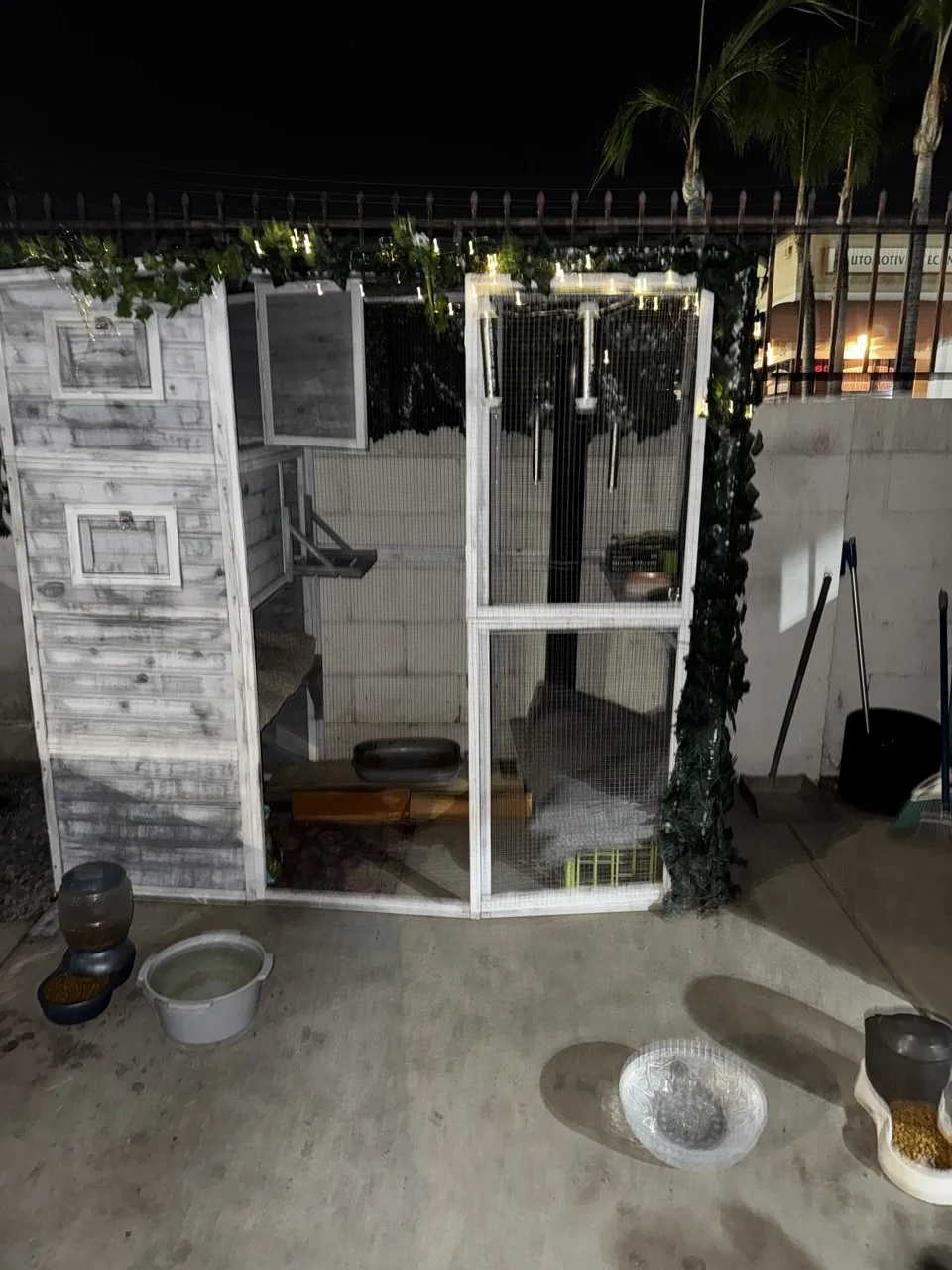
The setup is bigger than most cat owners' living rooms. It needs to be — there are a lot of cats, and they each deserve their own corner.
A custom-built wooden shelter with a mesh "catio" front, string lights for the cats that get nervous in the dark, and faux greenery to soften it. Inside there are shelves, beds, and food and water bowls. The mesh keeps coyotes and raccoons out while letting the cats see what's happening on the lot.
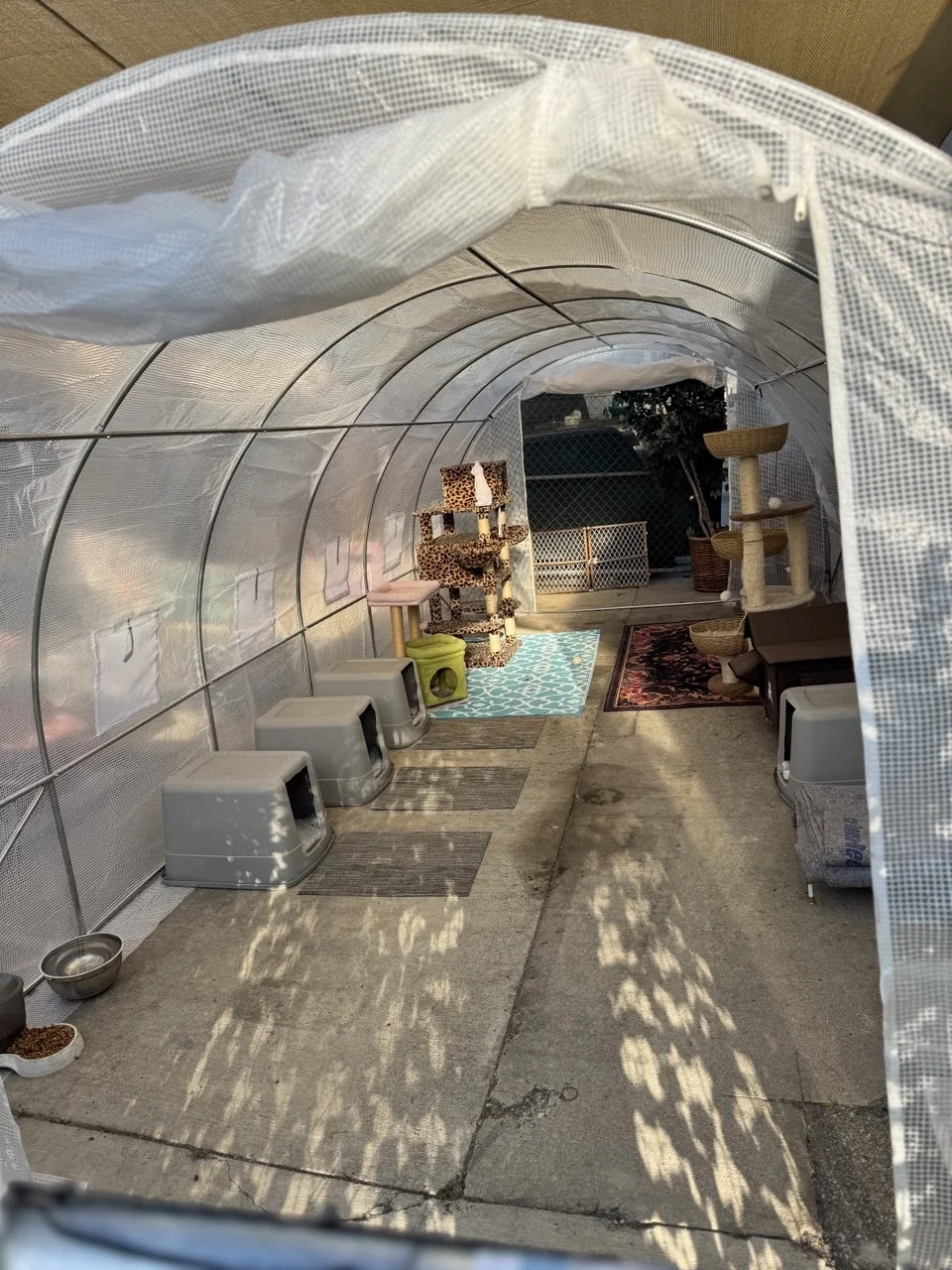
A greenhouse-style tunnel kitted out with cat trees, scratching posts, soft beds, and litter boxes lined up along the walls. Sunlight comes through the translucent panels in the day, the rugs warm up in the afternoon, and the cats spend hours stretched out in the sun.
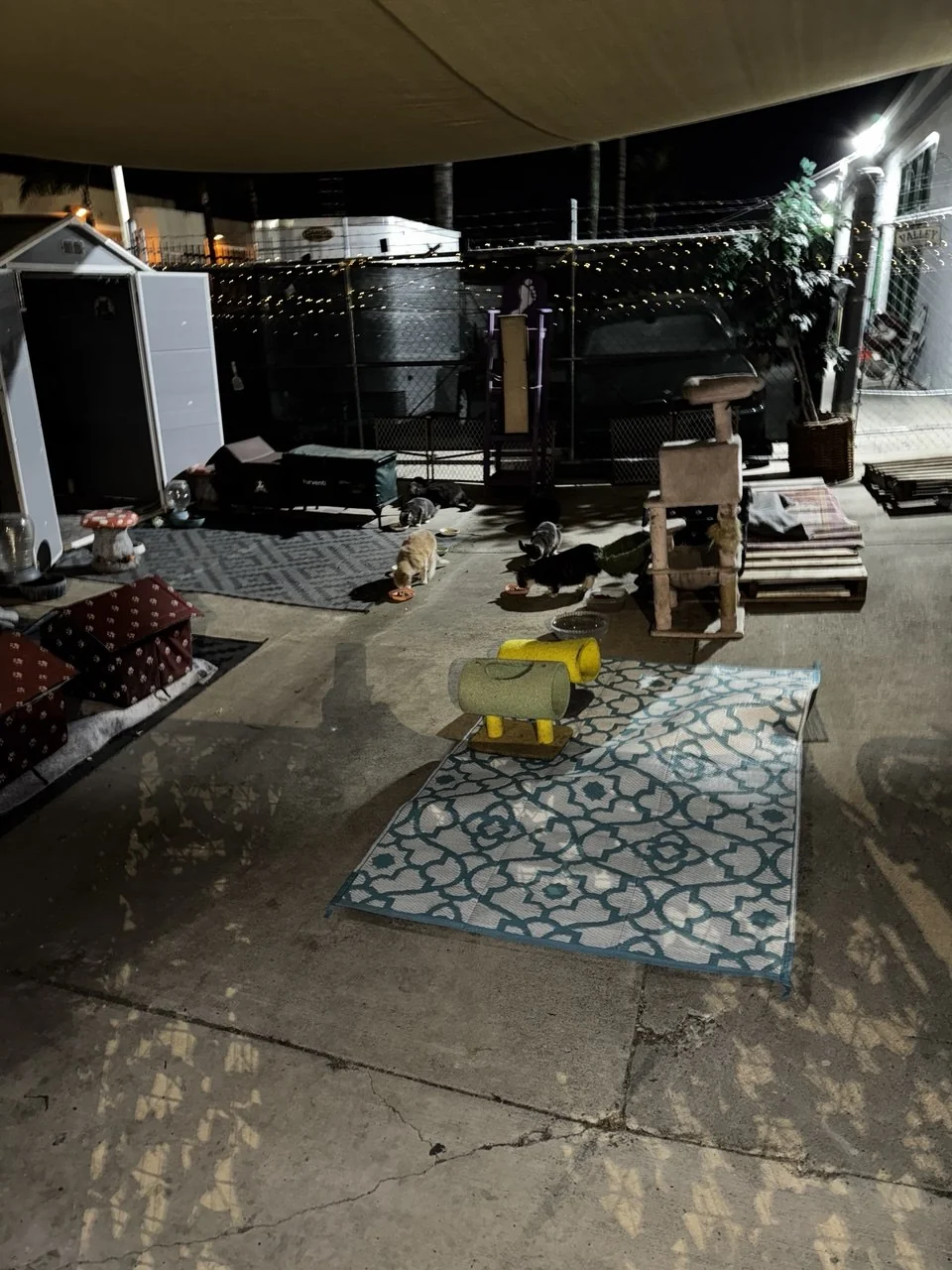
Twice a day, every day. The colony gathers, every cat has a bowl, and Mary makes sure nobody gets pushed off their food. The shy ones eat in the back. The bold ones eat up front. The kittens get their own spot.
No overhead, no salaries, no admin fees. This isn't a 501(c)(3) — it's a family taking care of cats. Every dollar buys exactly what it says it buys.
Dry food, wet food for the older cats, and fresh water year-round. Multiple feeding stations so nobody gets crowded out at mealtime.
Spay and neuter surgeries, vaccinations, flea treatment, and emergency vet visits when one of the cats gets hurt. The single biggest line item.
Bedding that gets replaced as it wears out, litter and litter boxes, scratching posts, and the materials to repair and expand the habitat as the colony grows.
Send a few dollars or send supplies — both make a real difference. Mary keeps a running list on Amazon for the things she goes through fastest.
Send any amount to @Mary-Houston. Mention "cats" in the note so we know where to direct it.
Donate via Venmo →@Mary-Houston
Mary's list of what the colony actually needs — food, litter, beds, scratchers. Buy any item and it ships straight to us.
View the Wishlist →amazon.com/…/1KEP9PB22WQR4
A note from Mary: I don't usually ask for help, but the cats need more than I can give them alone. Whatever you can send goes straight into food bowls, vet bills, and a roof over the colony's head. Thank you for caring about the cats nobody else was looking after.
Want to visit, drop off supplies in person, or just hear more about the cats? Mary will pick up.